
HVAC Contractor Insurance in Las Vegas, NV
Running an HVAC business in Las Vegas means keeping the valley cool when temperatures push past 110 degrees, and that round-the-clock demand comes with round-the-clock risk. One refrigerant leak, a rooftop unit that damages a client’s roof, or a technician who slips off a ladder on a commercial job can turn a busy summer into a serious financial setback. At Harris Insurance, we help licensed HVAC installation, repair, and maintenance companies across Las Vegas, Henderson, and Summerlin build insurance programs that protect their license, their crew, and their bottom line. As an independent broker licensed in Nevada, Arizona, Utah, and California, we match your coverage to the real risks of Nevada’s climate and construction market.
Why HVAC Contractors in Las Vegas Need Specialized Insurance
Standard small-business policies weren’t built for HVAC contractors. They often exclude the exposures that come with mechanical work: refrigerant handling, high-voltage electrical connections, rooftop installs, and heavy equipment moving between sites. As a licensed C-21 contractor in Nevada, you need coverage built around your trade, not a generic policy that leaves gaps.
Here’s what makes HVAC work particularly high-risk from an insurance standpoint:
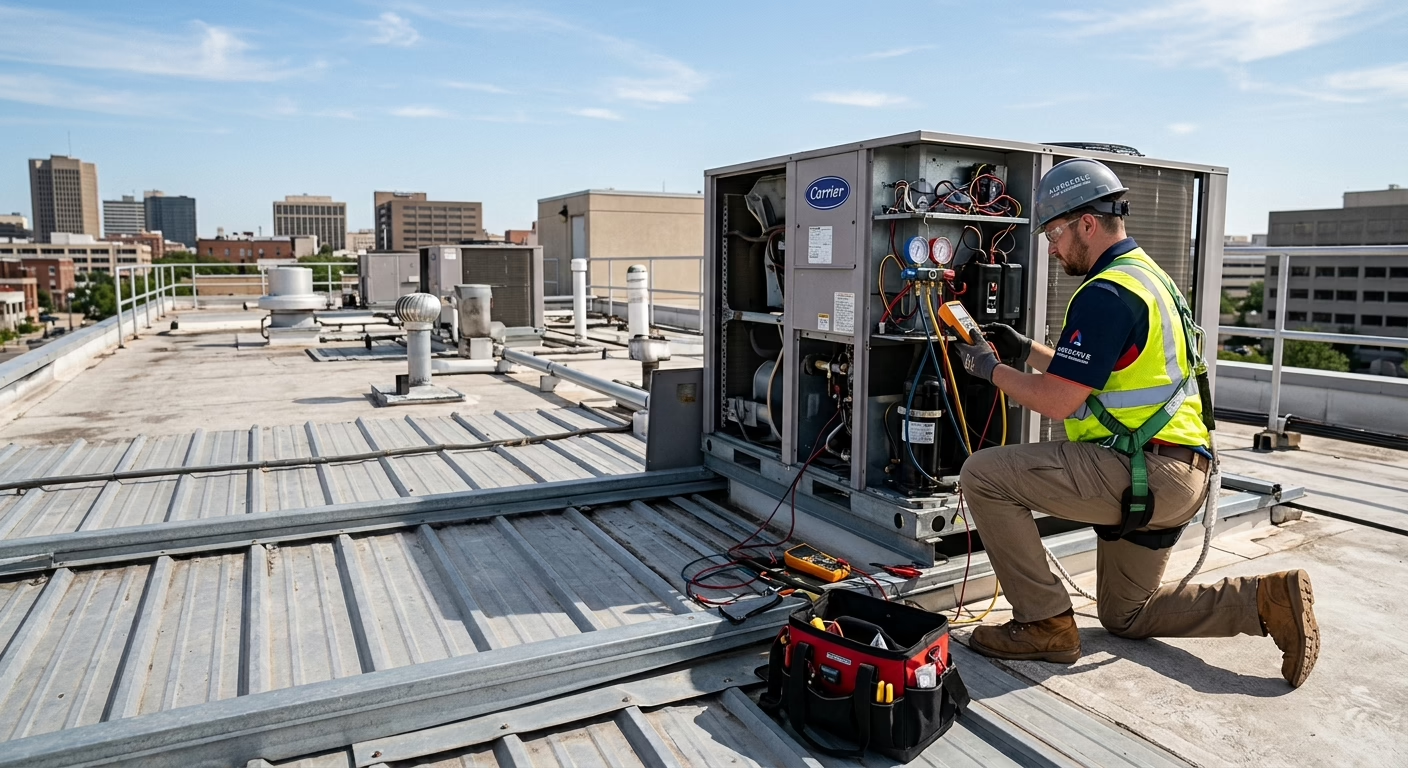
Las Vegas heat drives year-round demand, which means more service calls, more rooftop work, and more chances for something to go wrong. Summer emergency calls put your crew on hot roofs and inside tight mechanical spaces every single day.
Falls are one of the leading causes of serious injury for HVAC technicians. Rooftop package units, ladders, and attic work all create height exposure that leads to costly workers’ comp claims.
Refrigerant and electrical hazards are real. Handling refrigerants, brazing lines, and wiring high-voltage components can cause burns, chemical exposure, and fire, any of which can trigger both liability and workers’ comp claims.
Property damage claims are common. A condensate leak that ruins a ceiling, a rooftop unit that damages a membrane roof, or an improperly charged system that fails can result in expensive repair claims.
Expensive equipment travels with your crew. Recovery machines, gauges, vacuum pumps, and specialty tools are frequent theft targets from trucks and open job sites across the valley.
Commercial and subcontracted work adds layered liability. If you sub out sheet metal or crane work and that party causes a loss, the claim can still land on you.
HVAC Contractor Insurance Coverage Options in Las Vegas
General Liability Insurance
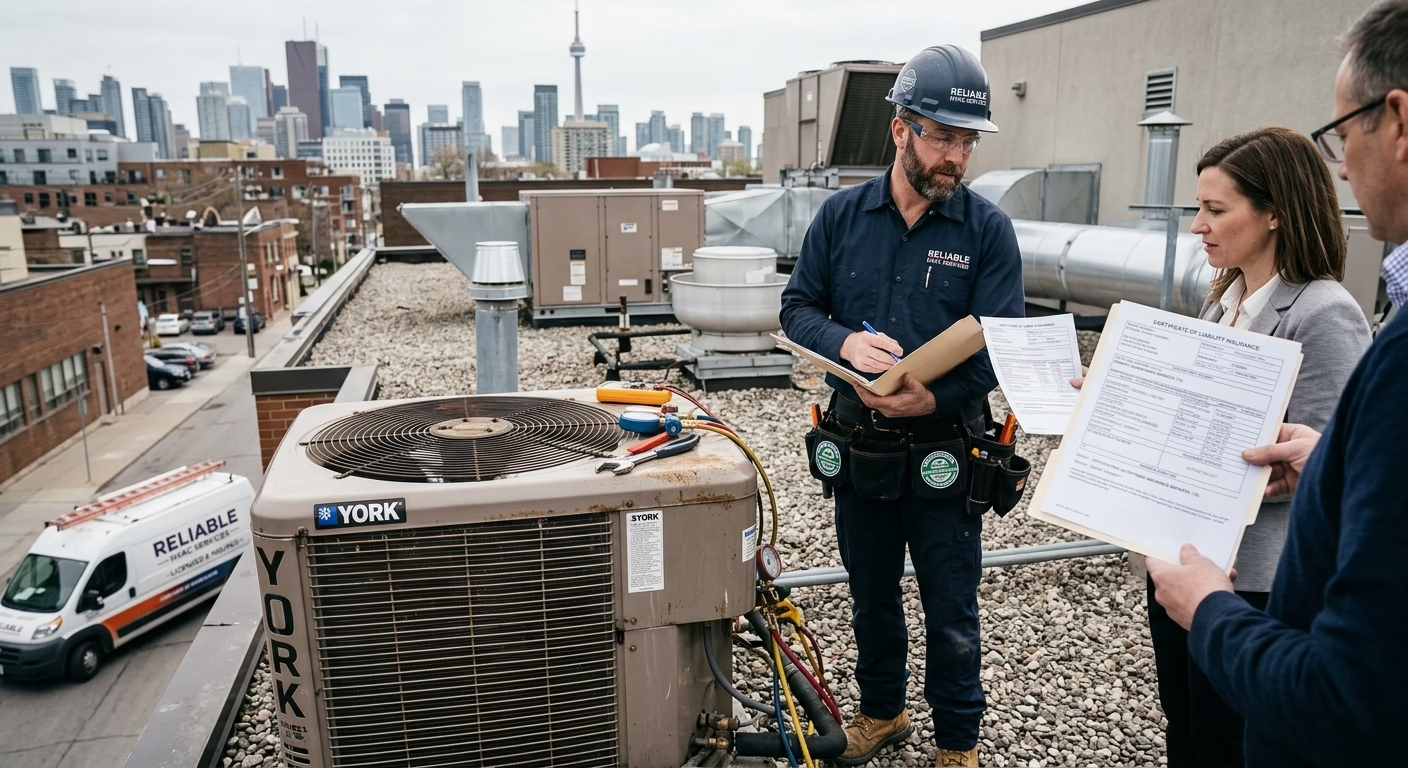
General liability (GL) is the foundation of any HVAC contractor’s insurance program. It covers third-party bodily injury, property damage, and personal injury claims that come out of your operations. If a client trips over your equipment, or a rooftop install is later blamed for water damage to a commercial building, GL responds. The Nevada State Contractors Board doesn’t mandate GL for license issuance on its own, but most GCs and property owners will require a certificate of insurance before you set foot on site. Learn more about general liability insurance and how it fits an HVAC program.
Workers' Compensation Insurance
If you have employees, workers’ comp isn’t optional. It’s a legal requirement in Nevada and a condition of your NSCB contractor’s license. The board requires proof of industrial insurance (workers’ comp), or a signed exemption affidavit, before your license is issued. HVAC work is commonly classified under NCCI Class Code 5537 (Heating, Ventilation, Air Conditioning and Refrigeration Systems), and your rate depends on your payroll, crew size, experience modifier, and claims history. For a fuller picture of workers’ comp for Nevada contractors, see our commercial insurance page.
Commercial Auto Insurance
If you drive a truck or van to job sites, and you do, personal auto won’t cover you when you’re on the clock. Commercial auto protects your vehicles, your equipment in transit, and your liability if an accident happens while you’re working. This matters most when employees drive company trucks between calls across the valley.
Tools and Equipment Coverage
Your recovery machines, gauges, vacuum pumps, and hand tools are your livelihood, and most GL policies won’t cover them. Tools and equipment coverage (sometimes written as inland marine) protects your gear against theft and damage whether it’s on a rooftop, in your van, or in storage. Job sites and vehicle theft is a persistent problem in Las Vegas, so this coverage earns its place fast.
Contractor's Bond
A surety bond shows clients and the state that you stand behind your work. The NSCB sets your required bond amount, ranging from $1,000 up to $500,000, based on your license limit and financial profile. We work directly with surety markets to get you bonded quickly and at the right amount. Learn more about permit and construction bonds for contractors.
Umbrella and Excess Liability
Large commercial HVAC projects, think hospitals, hotels, and warehouses, often require higher limits than a standard GL policy provides. An umbrella policy layers additional coverage over your existing GL and auto policies, protecting you when a single large claim exceeds your underlying limits.
How Harris Insurance Makes Claims Simple
At Harris Insurance, we don't just process claims - we protect your livelihood when disasters strike. Our straightforward approach keeps your Las Vegas contracting business moving forward:
1
Easy Claim Filing: Within hours of your notification, our team mobilizes - because in construction, every day of downtime costs you money and client trust.
2
Ongoing Support: We fight for your interests against adjusters who might undervalue damage or liability claims, leveraging our century of experience to maximize your protection.
3
Expert Guidance: No insurance jargon or confusing policies - just straight talk about your coverage and claim status from specialists who understand Las Vegas building codes.
4
Rapid Resolution: When a client sues over property damage or a worker suffers injury, we ensure your business doesn't bear the crushing financial burden through efficient claim handling.
5
Always Accessible: While competitors struggle with claim complications, you'll maintain project schedules with our team ready by phone, email, or in-person whenever construction challenges arise.
What Each Coverage Protects: At a Glance
Ready to Get Covered? Talk to a Harris Insurance specialist who knows the Nevada construction market. We’ll build a program around your trade, your crew size, and the jobs you run across the Las Vegas valley. Request a Free Quote
General Liability
Third-party bodily injury, property damage, and completed operations claims
Workers’ Compensation
Employee injuries on the job, medical bills, lost wages, and death benefits
Tools and Equipment
Theft, loss, or damage to tools and equipment on or off the job site
Commercial Auto
Vehicle accidents, property damage, and liability while driving for work
Contractor’s Bond
Financial guarantee of license compliance and contract performance
Umbrella / Excess Liability
Claims that exceed the limits of your underlying GL or auto policies
Nevada Licensing and Insurance Requirements for HVAC Contractors
To legally perform HVAC work in Nevada on any project valued at $1,000 or more in combined labor and materials, you need a Classification C-21 (Refrigeration and Air Conditioning) license from the Nevada State Contractors Board, issued under Nevada Revised Statutes Chapter 624. Here’s what the NSCB generally requires before your license is issued:

A completed application and $300 application processing fee
Four years of documented experience as a journeyman, foreman, supervising employee, or contractor in the classification requested
A designated Qualifying Party who has passed the C-21 trade exam
Passing the C-21 trade exam and the Nevada Business and Law (Contractor Management Survey) exam
A contractor’s bond in the amount set in your approval letter (from $1,000 to $500,000, based on your license limit)
Proof of workers’ compensation insurance, or a signed exemption affidavit if you have no employees
A financial statement for license limits above $10,000
General liability isn’t listed as a universal line item on every C-21 checklist, but don’t let that fool you. Most municipalities, GCs, and property owners in Las Vegas require proof of GL before work begins, and operating without it puts your license and your business at serious risk under NRS 624.
One more thing worth knowing: some HVAC work overlaps other classifications. Forced-air heating can fall under C-1D (Warm Air Heating and Air Conditioning), and sheet metal or ductwork may call for a separate sheet metal classification. We can help you confirm the coverage that matches your exact license scope.
Why Las Vegas HVAC Contractors Choose Harris Insurance
We’ve protected construction businesses in Las Vegas since the 1970s. That’s not a tagline. It means we’ve watched how HVAC contractors get caught off guard by coverage gaps, and we’ve spent decades building programs that hold up when a claim actually happens.
We specialize in construction trades
We know the difference between a GL policy that includes completed operations and one that doesn’t, and for HVAC work, that difference matters.
We work with multiple carriers
As an independent agency, we shop your coverage across a range of insurers to find the right fit at a competitive rate, rather than fitting you into one company’s box.
We serve the whole Las Vegas metro
Whether you’re based in Henderson, Summerlin, North Las Vegas, or working the Strip corridor, we know the local project landscape and what GCs expect you to carry.
We're licensed in four states
Harris Insurance is licensed in Nevada, Arizona, Utah, and California. If your work crosses state lines, we can extend your program to match.
We speak contractor
No jargon, no generic policies. We’ll explain your coverage in plain terms and flag gaps before they turn into problems.
Frequently Asked Questions
Do I need general liability insurance to get my Nevada HVAC contractor's license?
The Nevada State Contractors Board doesn’t require general liability as a blanket condition for every license classification, but workers’ compensation (or an exemption affidavit) is required before your C-21 license is issued. In practice, most GCs, property owners, and municipalities in Las Vegas require a GL certificate before you can work on their projects, so it’s effectively a market requirement even where it isn’t strictly a licensing one.
What workers' comp class code applies to HVAC contractors in Nevada?
Most HVAC installation, service, and repair work is classified under NCCI Class Code 5537 (Heating, Ventilation, Air Conditioning and Refrigeration Systems). Sheet metal and duct fabrication can fall under a separate class code. Your class code drives your workers’ comp rate, so getting it right matters, being misclassified can mean overpaying or facing an audit adjustment at year end. The National Council on Compensation Insurance maintains the classification system used in Nevada.
How much does HVAC contractor insurance cost in Las Vegas?
It depends on your payroll, crew size, the mix of residential and commercial work you take on, your equipment values, and your claims history. General liability for a small HVAC contractor typically starts in the low four figures annually, and workers’ comp is priced per $100 of payroll based on your class code and experience rating. Commercial work and larger crews push those numbers higher. The most accurate way to get a number is to have an agent review your specific operations, and we’re happy to put together a no-obligation quote.
Is a contractor's bond the same as insurance?
No. A surety bond and insurance do different jobs. A bond guarantees you’ll meet your contractual and licensing obligations. If you don’t, the bond compensates the harmed party, and you repay the surety company. Insurance protects your business from covered losses and generally doesn’t require repayment. HVAC contractors in Nevada typically need both: a bond to satisfy NSCB licensing, and insurance to protect against day-to-day operational risk.
What's the difference between general liability and workers' compensation for HVAC contractors?
General liability covers claims from third parties: a client, a property owner, or a passerby who suffers injury or property damage because of your work. Workers’ compensation covers your own employees when they’re hurt on the job. Both are essential for a full-service HVAC company. GL protects you from outside claims, and workers’ comp meets your legal obligation to your crew while protecting you from employee injury lawsuits.
Can Harris Insurance cover me if I work in Arizona, Utah, or California as well as Nevada?
Yes. Harris Insurance is licensed in Nevada, Arizona, Utah, and California, and we can build a program that follows your work across state lines. If you’re licensed in one state and expanding into another, we’ll align your insurance with your licensing footprint in each.
Get a Quote for HVAC Contractor Insurance in Las Vegas
You’ve put in the years to earn your C-21 license and build a book of business in one of the busiest HVAC markets in the country. Don’t let a single uncovered incident undo it. Harris Insurance has been building insurance programs for Las Vegas contractors for over 50 years, and we’re ready to do the same for your HVAC business.
Whether you’re a solo tech looking for basic coverage or a growing company running commercial rooftops across the valley, we’ll tailor a program that fits. Reach out to our team today and let’s talk through your coverage needs.

Get in Touch
For more insurance information, please contact us here. We will get back to you shortly.
6445 W. Sunset Rd., Ste. 156 Las Vegas, NV 89118 (Located In Sunset Business Center)
Monday to Friday 7:30 to 4:30 PM Saturday and Sunday CLOSED
702.202.6611