
Roofing Contractor Insurance in Las Vegas, NV
Running a roofing company in Las Vegas means climbing onto hot, steep, and sometimes storm-damaged roofs day after day, and that work carries more risk than almost any other trade. One fall, one leak that shows up three months after the job, or one crew member hurt on a commercial tear-off can wipe out a profitable season if you don’t have the right coverage behind you. Roofing contractor insurance protects your license, your crew, and your business from the exposures that come with the job. At Harris Insurance, we help licensed roofers across Las Vegas, Henderson, and Summerlin build programs that actually hold up when a claim happens, as part of our broader construction insurance practice.
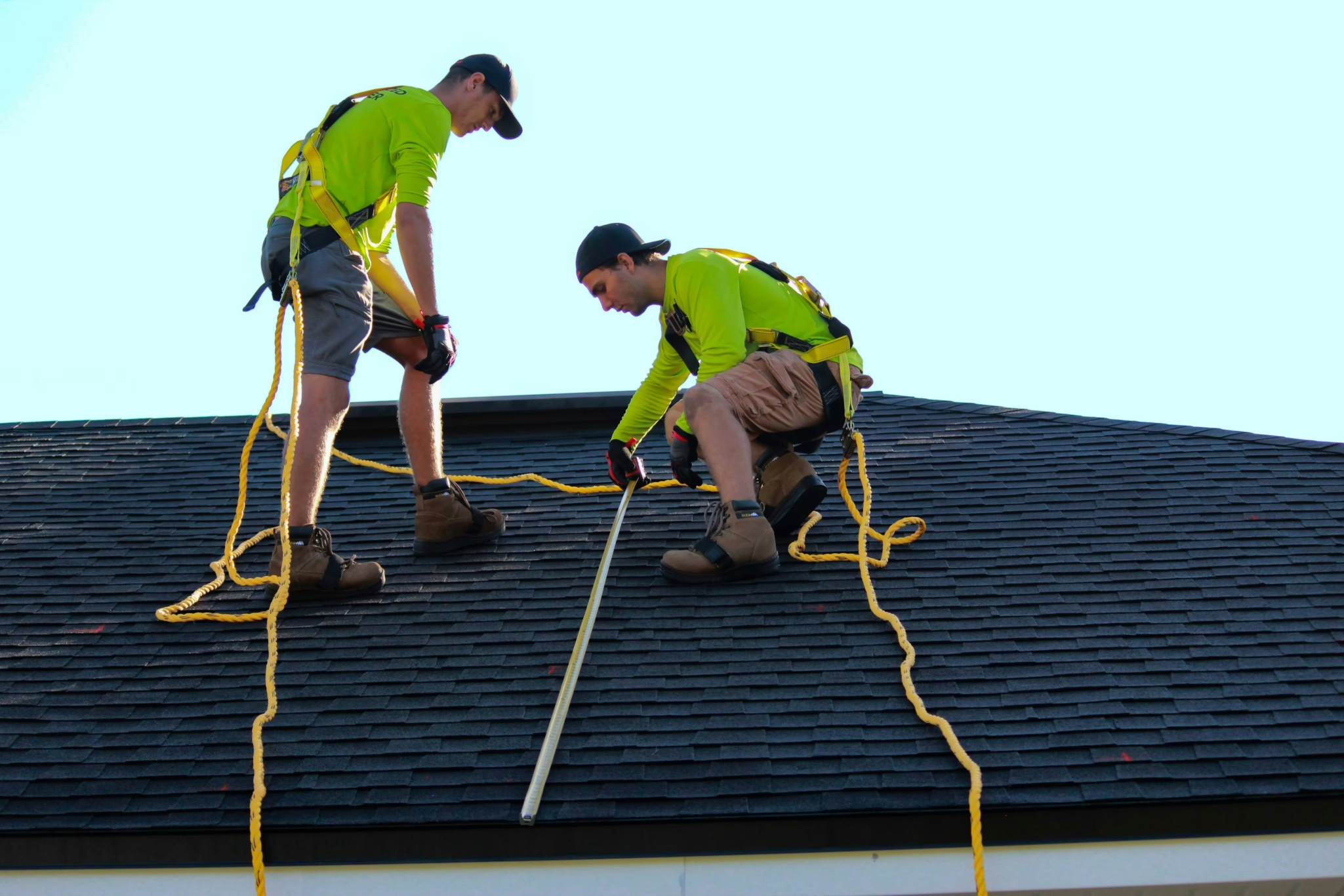
Why Roofing Contractors in Las Vegas Need Specialized Insurance
Most small-business policies weren’t written with roofers in mind. They tend to exclude the exact exposures that come with your work, and some carriers won’t touch a roofing operation at all. As a licensed C-15 or C-15a contractor in Nevada, you need coverage built around the way you actually work.
Here’s what makes roofing one of the highest-risk trades to insure:
- Falls from height are the number one hazard in roofing. According to Bureau of Labor Statistics data, roofers have one of the highest fatality rates of any occupation, and the large majority of those deaths are caused by falls. Carriers price that risk straight into your premium.
- Las Vegas heat is its own exposure. Roof surface temperatures in the summer can push well past what crews and materials are rated for, which raises the odds of heat illness on the job and adds a workers’ comp angle other markets don’t deal with.
- Hot work starts fires. Torch-applied modified bitumen, hot-mopped built-up roofs, and kettles all create burn and fire exposure, and a single fire claim on a commercial building can run into six figures.
- Storm and monsoon season drives restoration work. Roofers who chase hail, wind, and microburst damage take on extra risk: working on already-compromised structures, emergency tarping, and, for anyone who helps homeowners with insurance claims, potential errors-and-omissions exposure.
- Completed operations claims are common. A roof that passes inspection but leaks months later can damage ceilings, drywall, and inventory, and that claim lands on you long after the crew has moved on.
- Subcontractors create layered liability. Roofing runs on subs and day labor, and any sub who can’t show valid coverage gets charged back to your policy at the 5551 rate. Missing certificates and additional-insured endorsements are a fast way to blow up an audit.
- Tools, compressors, nail guns, and materials get stolen off job sites and out of trucks, and your general liability policy won’t replace them.
Coverage Options for Las Vegas Roofing Contractors
General Liability Insurance
General liability (GL) is the foundation of any roofer’s program. It covers third-party bodily injury, property damage, and personal injury claims that come out of your work, like a passerby hurt by falling debris or water damage traced back to your installation. Make sure your policy includes completed operations, because that’s what responds when a roof fails after the job is done.
If you do storm-damage inspections or help homeowners file claims, ask us about adding professional liability (errors and omissions) too. While the Nevada State Contractors Board doesn’t require GL to issue your license, GCs, project owners, and Clark County municipalities will want a certificate before you set foot on site. Learn more about general liability insurance on our site.
Workers' Compensation Insurance
If you have employees, workers’ comp isn’t optional. It’s a legal requirement in Nevada and a condition of your NSCB roofing license. Roofing falls under NCCI Class Code 5551, which is one of the most expensive workers’ comp classifications on the books, often running several times what electricians or plumbers pay for the same payroll, because the injury and fatality numbers are so high. Your actual rate depends on your payroll, your claims history, and your experience modifier, and getting your class codes and payroll splits right can save you thousands a year.
If your crews cross into California, the rules change in two ways worth knowing. California doesn’t use 5551. It uses a dual-wage pair, 5552 and 5553, split by the employee’s regular hourly wage: payroll for anyone not documented at or above the threshold is classified as 5552, the higher-rated half. California also requires workers’ compensation for every CSLB-licensed contractor under SB 216, including sole operators with no employees at all, which is stricter than Nevada’s exemption-affidavit route. We’re licensed in both states and can structure a program that satisfies each.
Commercial Auto Insurance
If you’re driving trucks and trailers loaded with materials to job sites, and you are, personal auto won’t cover you on the clock. Commercial auto protects your vehicles, your materials in transit, and your liability if there’s an accident while you or an employee is working. This matters even more once you’ve got crews driving company trucks.
Tools, Equipment and Materials Coverage
Your tools and equipment are your livelihood, and most GL policies won’t replace them if they’re stolen or damaged. This coverage protects hand tools, power tools, nail guns, compressors, and specialty gear whether they’re on the roof, in the truck, or in storage. If you’re staging materials on a new-construction site, an installation floater (a form of builder’s risk) can also cover shingles, membrane, and other materials against theft or weather damage before they’re installed.
Contractor's License Bond
A surety bond shows the state and your clients that you’ll stand behind your work and your license. The NSCB sets your required bond amount based on your C-15 or C-15a classification and your monetary limit. We work directly with surety markets to get roofers bonded quickly and at the right amount, and we can handle permit bonds when a specific job calls for one.
Umbrella / Excess Liability
Larger commercial roofing contracts, hotels, warehouses, and multifamily jobs often require higher limits than a standard GL policy carries. An umbrella policy layers extra coverage over your GL and auto, so a single large claim doesn’t blow past your underlying limits and land on your business.
What Each Coverage Protects: At a Glance
| Coverage Type | What It Protects Against |
| General Liability | Third-party bodily injury, property damage, and completed-operations claims (like water damage from a roof that leaks after the job) |
| Workers’ Compensation | Crew injuries from falls and job-site accidents, medical bills, lost wages, and death benefits |
| Tools, Equipment and Materials | Theft, loss, or damage to tools, equipment, and staged materials on or off the job site |
| Commercial Auto | Accidents, property damage, and liability while driving trucks and trailers to job sites |
| Contractor’s License Bond | Financial guarantee of C-15/C-15a license compliance and contract performance |
| Umbrella / Excess Liability | Large claims that exceed the limits of your underlying GL or auto policies |
Ready to Get Covered? Roofing gets declined by carriers that write every other trade without blinking. We’ll tell you straight whether your operation is placeable, what the underwriter is going to ask about, and what it will take to get terms. Request a Free Quote
Nevada Licensing and Insurance Requirements for Roofers
To legally perform roofing work in Nevada, you need a C-15 (Roofing and Siding) or C-15a (Roofing) contractor license from the Nevada State Contractors Board. A C-15 holder may perform any work authorized under the C-15 subclassifications, which also include siding (C-15b), insulation (C-15c), and waterproofing (C-15d). Here’s what the NSCB requires before your license is issued:
- A completed application with the required processing fee
- Four years of documented, qualifying experience within the last 10 years (as a journeyman, foreman, supervisor, or contractor)
- Passing the C-15 or C-15a Roofing trade exam and the Contractor Management Survey (Business and Law) exam
- A financial statement showing you meet the required limit
- A surety bond in the amount set in your approval letter
- Proof of industrial insurance (workers’ compensation), or a signed exemption affidavit if you have no employees
General liability isn’t on the NSCB checklist, but don’t let that fool you. Most municipalities, GCs, and project owners in Las Vegas require proof of GL before you can start work, and operating without it can cost you jobs and put your business at serious financial risk.
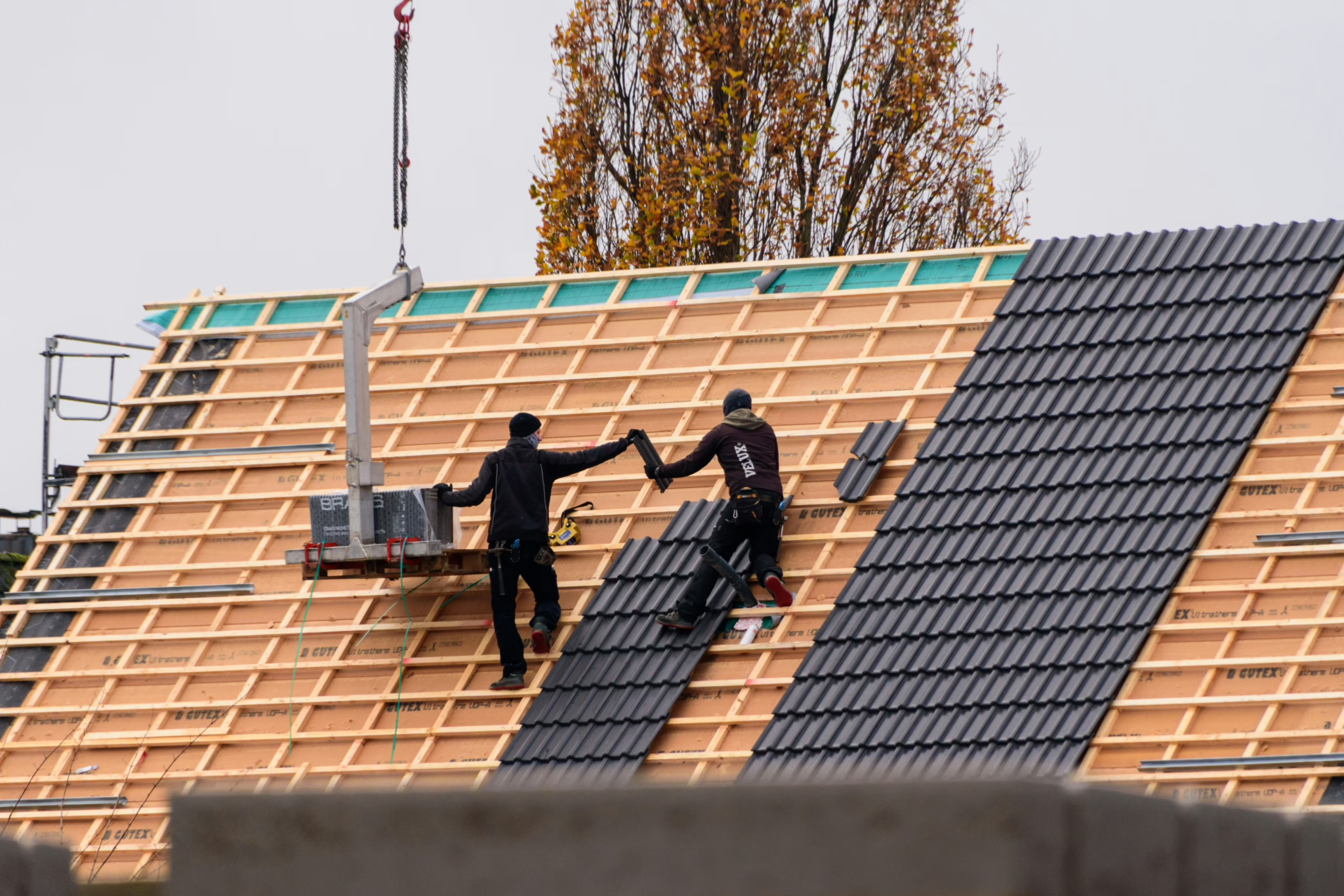
How Much Does Roofing Insurance Cost in Las Vegas?
There’s no single number, and any agent who gives you one before seeing your operation is guessing. For context, general liability for Las Vegas contractors generally starts in the $1,000 to $3,000 per year range, and roofing sits at the upper end of that or above it because of the class. Workers’ comp is usually the largest single line item on a roofing program, priced per $100 of payroll against your 5551 rate and experience modifier, and it can run several times what a lower-hazard trade pays on identical payroll.
Three things move a roofing quote more than anything else: your residential-to-commercial mix, whether you do hot work or torch-applied systems, and how clean your certificate management is on subcontractors. Tightening up the third one is often the fastest premium reduction available to a roofer. We’ll quote your actual operation at no obligation.
Why Las Vegas Roofing Contractors Choose Harris Insurance
We place roofing when other agencies can’t
Roofing is one of the toughest classes in the market, and plenty of carriers decline it outright or cap the height and the hot work you’re allowed to do. We know which markets genuinely want roofing business and how to present your loss history, safety program, and job mix so it gets underwritten on its merits instead of screened out by class code.
We check the completed-operations wording before you need it
Most roofing claims that turn into disputes are leak claims filed months after final invoice. We confirm your GL actually carries completed operations, and at limits sized for the roofs you install, rather than assuming the base form covers it.
We manage the subcontractor exposure that wrecks audits
Uninsured subs get charged back to your policy at the 5551 rate, and that surprise usually arrives at year-end audit when the money is already spent. We set up certificate and additional-insured tracking so your audit reflects the payroll you actually ran.
We know what Las Vegas GCs require on paper
Henderson, Summerlin, North Las Vegas, and the Strip corridor each come with their own certificate limits and additional-insured wording. We know what your customers are going to ask for before they ask.
We’re licensed in Nevada, Arizona, Utah, and California
Storm work travels. If your crews follow restoration demand across state lines, we can extend your program and account for the different class code and licensing rules in each state.
Frequently Asked Questions
Roofing is classified under NCCI Class Code 5551 (Roofing, All Kinds and Drivers), which covers new installation, repair, tear-offs, and every roofing material, along with your yard and driver payroll. It’s one of the highest-rated classes in the entire workers’ comp system. The National Council on Compensation Insurance (NCCI) maintains the classification system used in Nevada, and getting your code and payroll splits right matters, because any employee who does any roofing work has their full payroll swept into 5551.
It comes down to risk. According to Bureau of Labor Statistics data, roofers have one of the highest workplace fatality rates of any occupation, with falls causing the large majority of deaths. Carriers price that into workers’ comp and GL rates, and some decline roofing altogether. That’s why working with an independent agency that knows the roofing markets can make the difference between getting covered and getting declined.
It depends on your payroll, crew size, the mix of residential and commercial work you do, and your claims history. Workers’ comp is usually the biggest single line item because of the 5551 rate, and general liability, commercial auto, tools coverage, and your bond add to the total. The only way to get an accurate number is to have an agent review your actual operation, so reach out for a no-obligation quote.
Restoration roofers take on a few added exposures. You’re often working on structures that are already damaged, doing emergency tarping, and sometimes helping homeowners navigate their insurance claims. On top of solid GL with completed operations, it’s worth asking about professional liability (errors and omissions) if you inspect roofs or advise on claims, and about higher limits, since storm work can mean more jobs and more crews on more roofs at once.
This is where roofers get caught off guard. Most GL policies exclude the cost of redoing your own faulty work, but a policy with completed operations can respond to the resulting damage, for example the drywall and flooring ruined when a roof you installed leaks. The wording matters a lot here, so this is exactly the kind of gap we check for when we build your program.
Yes, for part of it. The Nevada State Contractors Board requires proof of industrial insurance (workers’ compensation), or an exemption affidavit if you have no employees, plus a surety bond before it issues your C-15 or C-15a license. General liability isn’t on the NSCB’s checklist, but most GCs, project owners, and municipalities in Las Vegas will require a GL certificate before you can work. It’s effectively a market requirement even when it isn’t a legal one.
Get a Quote for Roofing Contractor Insurance in Las Vegas
Four years of documented experience and two state exams stand behind your C-15. A single fall, torch fire, or leak claim on the wrong policy form can cost more than a season’s profit to defend. Harris Insurance has placed construction coverage in this market since the 1970s, and we’d rather find the holes in your current program now than explain them to you at claim time.
Whether you’re a solo operator or running multiple crews on commercial tear-offs across the valley, send us your current policy and we’ll tell you plainly where it falls short and what it would take to fix. Reach out to our team today and let’s talk through your coverage needs.
Get in Touch
For more insurance information, please contact us here. We will get back to you shortly.
6445 W. Sunset Rd., Ste. 156 Las Vegas, NV 89118 (Located In Sunset Business Center)
Monday to Friday 7:30 to 4:30 PM Saturday and Sunday CLOSED
702.202.6611